
In insurance sales, success rarely comes down to luck. The agents who consistently grow their books of business are the ones who follow proven processes, build trust quickly, and stay disciplined in how they prospect, present, follow up, and retain clients. In a competitive and relationship-driven industry, strong insurance sales techniques can be the difference between constantly chasing the next lead and building a sustainable, profitable agency.
Whether you are a new producer trying to gain traction or an experienced independent agent looking to improve results, refining your sales approach is one of the highest-return investments you can make. Effective sales strategies help you generate more opportunities, improve close rates, retain more clients, and create referral momentum that compounds over time.
The most successful agents understand that sales is not about pushing products. It is about identifying needs, solving problems, and guiding clients toward protection that fits their real-world risks. When that mindset is paired with structure and consistency, growth follows.

What Are Insurance Sales Techniques?
Insurance sales techniques are the structured approaches agents use to attract, convert, and retain clients. These techniques include how agents prospect for new business, qualify opportunities, conduct discovery, present solutions, handle objections, close deals, and follow up after the initial conversation.
Strong sales techniques directly impact agency growth, client retention, and long-term profitability. Agencies that rely only on random referrals or inconsistent activity often struggle with uneven production. By contrast, agents who build repeatable sales habits can create a healthier pipeline, serve clients more effectively, and improve their overall close ratio.
In today’s crowded marketplace, sales skill is a true competitive advantage. Clients have more choices than ever, and many buyers begin their search online before they ever speak with an agent. That means agents need more than product knowledge. They need strong communication skills, a clear process, and the ability to build credibility quickly.
For additional strategies on improving production, see how to increase insurance sales.
Key Takeaways
- Insurance sales techniques help agents close more business by using proven strategies to attract, convert, and retain clients.
- Building trust and understanding client needs leads to higher conversion rates and stronger long-term relationships.
- Consistent prospecting and follow up are essential for maintaining a steady pipeline and increasing sales performance.
- Leveraging technology and refining your sales process helps scale growth and improve overall efficiency.
Building A Strong Foundation For Sales Success
Consistent success in insurance sales starts with the right mindset, the right habits, and the right daily activity. Many agents spend too much time looking for shortcuts when the real answer is often more straightforward: define the right actions, perform them consistently, and measure the outcomes.
Clear goals matter because they create direction. Agents who know their monthly premium targets, quote goals, close ratios, and retention benchmarks are better positioned to make informed decisions about how they spend their time. Just as important, tracking performance metrics helps identify where breakdowns are happening. If the pipeline is full but close rates are low, the issue may be presentation or objection handling. If close rates are strong but opportunities are limited, the issue is probably prospecting.
Discipline and consistency almost always outperform short bursts of effort. A few highly productive days cannot make up for weeks of inconsistent prospecting, weak follow up, or poor pipeline management. Top-performing agents build systems that make success more repeatable.
Key Habits Of Top Performing Agents
- Start each day with a structured prospecting plan.
- Commit to continuous learning and skill development.
- Follow up consistently with prospects and clients.
Mastering Prospecting To Build A Steady Pipeline
Effective prospecting is what creates predictable growth. Without a steady flow of new opportunities, even strong closers will eventually hit a ceiling. Prospecting should not be reactive or occasional. It needs to be proactive, ongoing, and focused on the audiences most likely to convert.
The best agents are intentional about who they target. Rather than trying to market to everyone, they define the client profiles, industries, households, or business segments that best align with their expertise and carrier access. That focus improves the quality of conversations and increases efficiency.
For more ideas on creating opportunity flow, visit generate insurance leads.
Proven Prospecting Techniques
- Use referrals from existing clients to generate high-quality leads.
- Leverage local networking and community involvement to build visibility.
- Utilize digital channels such as email and social media outreach.
Qualifying Prospects Effectively
| Benefit | Impact On Agency Growth |
|---|---|
| Needs | Ensures the client has a real coverage gap |
| Budget | Confirms affordability and reduces objections |
| Timing | Identifies urgency and readiness to buy |
| Decision Maker | Ensures you are speaking with the right person |
Building Trust And Credibility With Prospects
Trust is the foundation of every successful insurance sale. Buyers are not just evaluating policy features. They are deciding whether they trust your advice, your process, and your ability to protect what matters to them. In many cases, the deciding factor is not who had the cheapest quote. It is who made the client feel most confident.
Transparency and honesty help agents stand out from competitors who rely too heavily on scripted selling. When you clearly explain what is covered, what is excluded, and why a recommendation matters, clients are more likely to believe you are acting in their best interest. That credibility improves close rates and creates referral opportunities long after the initial sale.
How To Establish Credibility Quickly
- Share relevant insights and educate clients on risks they may not have considered.
- Demonstrate expertise through clear and confident communication.
- Provide tailored recommendations instead of generic solutions.
Understanding Client Needs Through Effective Discovery
Effective discovery is one of the most important parts of the insurance sales process. The quality of your recommendation depends on the quality of the questions you ask and the attention you pay to the answers. Agents who rush through discovery often miss the context that would have made their proposal more compelling.
Strong discovery uncovers pain points, coverage gaps, and personal or business goals that influence buying decisions. It also helps prospects feel heard. Listening is often more powerful than pitching during the early stages of the conversation because it builds trust and gives you the information needed to position value effectively.
Key Discovery Questions
- Ask about current coverage and satisfaction with existing policies.
- Explore recent life or business changes that impact risk exposure.
- Identify long-term goals that influence insurance decisions.
Presenting Solutions That Resonate With Clients
Great presentations focus on value, not just price. While cost matters, clients are ultimately buying protection, confidence, and outcomes. Agents who only talk about premium often reduce their own differentiation. Agents who connect coverage to the client’s real-world risks create a much stronger case.
Simplicity matters. Insurance can feel complicated, and prospects often disengage when the explanation becomes too technical. Clear communication helps buyers understand what they are getting and why it matters.
How To Present Insurance Solutions Effectively
- Break down complex coverage into easy-to-understand language.
- Use real examples to illustrate potential risks and outcomes.
- Customize proposals based on the client’s specific situation.
Handling Objections With Confidence
Objections are a natural part of the sales process. They should not be treated as rejection by default. In many cases, objections signal that the prospect is engaged and considering the purchase seriously. The goal is not to become defensive. It is to understand the concern and respond with clarity.
Confident objection handling depends on preparation. When you know the common concerns your prospects raise and have a thoughtful response ready, conversations stay productive and trust remains intact.
Common Objections And How To Respond
- Address price concerns by focusing on value and protection.
- Handle hesitation by reinforcing trust and credibility.
- Overcome comparison objections by differentiating your offering.
Closing More Deals With Proven Techniques
Closing should feel like a natural next step, not a high-pressure moment. If the discovery process was strong, the value was clear, and objections were addressed thoughtfully, the close becomes a logical continuation of the conversation.
Strong agents pay attention to timing and buying signals. When prospects ask implementation questions, request documentation, or begin talking about next steps, those are signs they are moving toward commitment. A good close makes the decision easy and clear.
Effective Closing Strategies
- Use assumptive language to move the conversation forward.
- Offer clear next steps to simplify the decision-making process.
- Reinforce the benefits of taking action now.
Following Up To Increase Conversion Rates
Many sales are won in the follow-up process, not the first conversation. Prospects get busy, priorities shift, and timing changes. The agents who stay top of mind without becoming pushy give themselves more chances to win.
Consistent follow up also signals professionalism and reliability. Each touchpoint should add value, whether that means answering a question, sharing a useful insight, or clarifying next steps.
Follow Up Best Practices
- Create a structured follow-up schedule for every prospect.
- Use multiple channels such as calls, emails, and texts.
- Provide additional value in each interaction.
Leveraging Technology To Improve Sales Performance
Technology can streamline activity, improve visibility into the pipeline, and make sales efforts more efficient. Agents who embrace the right tools can spend less time on administrative tasks and more time on revenue-generating conversations.
Data is also valuable. When you can see how many leads are entering the pipeline, how many quotes are being delivered, and how many opportunities are converting, it becomes much easier to improve performance systematically.
Tools That Support Insurance Sales
- Use CRM systems to manage client relationships and track activity.
- Implement marketing automation to nurture leads over time.
- Leverage quoting tools to provide fast and accurate proposals.
Building Long Term Client Relationships For Retention And Referrals
Winning new business is important, but long-term growth depends heavily on retention. Strong client relationships increase policy longevity, create cross-selling opportunities, and lead to referrals that are often easier to convert than cold leads.
Ongoing service is what turns a sale into a lasting relationship. Clients are more likely to stay loyal when they feel supported, informed, and valued beyond renewal time.
Strategies To Strengthen Client Relationships
- Schedule regular policy reviews to stay engaged.
- Communicate proactively about changes and opportunities.
- Deliver consistent and high-quality service experiences.
Developing A Personal Sales Process That Scales
Every agent benefits from having a repeatable, measurable sales system. A defined process makes it easier to train team members, spot inefficiencies, and increase results over time. Without a process, performance becomes dependent on memory, mood, or improvisation.
The best sales systems are simple enough to follow consistently and flexible enough to improve as new insights emerge. The goal is not perfection. The goal is repeatability.
Steps To Build Your Sales System
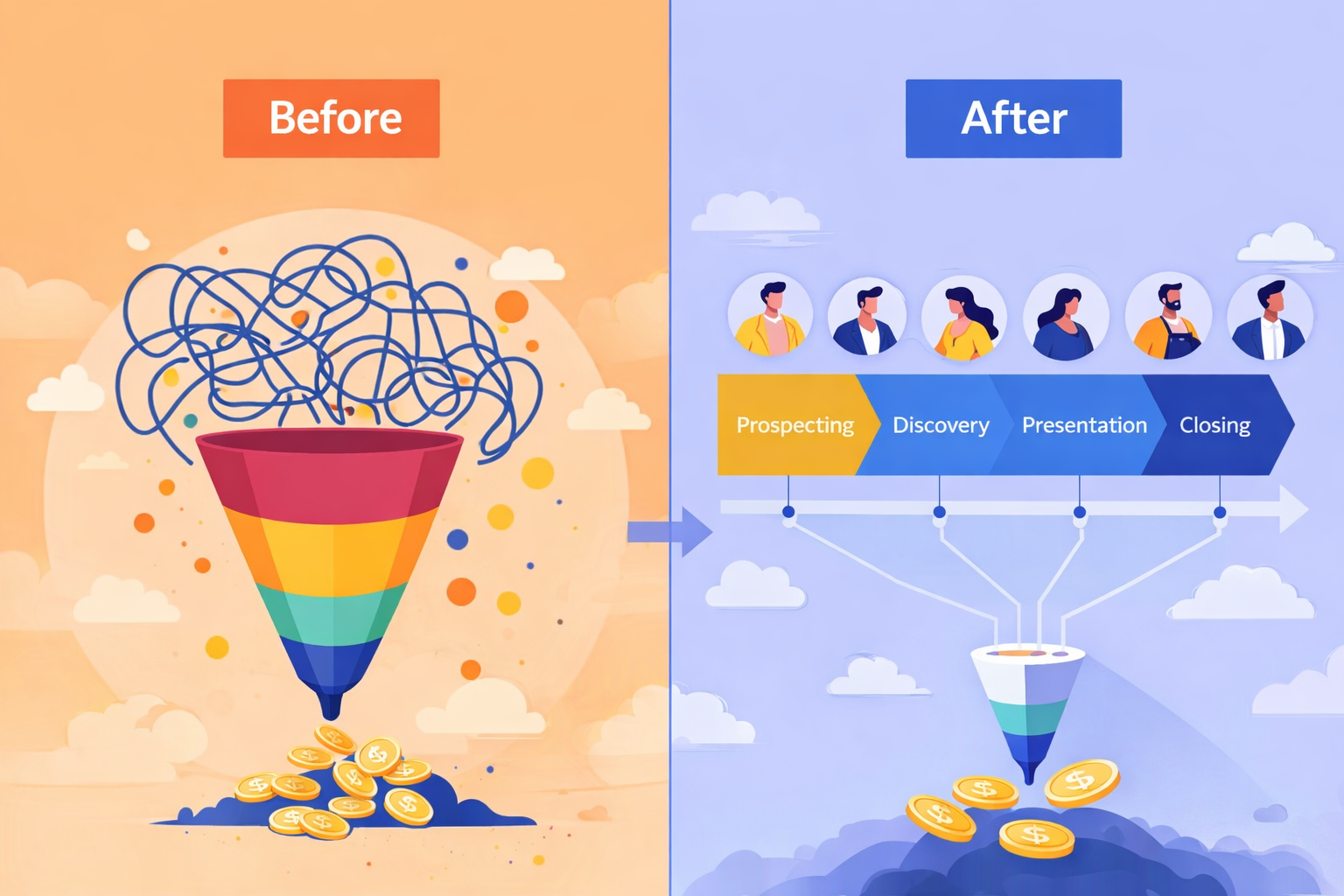
- Map out each stage of your sales funnel from prospecting to closing.
- Define key activities and benchmarks for each stage.
- Continuously refine your approach based on results.
| Sales Stage | Primary Focus |
|---|---|
| Prospecting | Generate consistent opportunities through referrals, networking, and digital outreach |
| Discovery | Ask strong questions, listen carefully, and identify true coverage needs |
| Presentation | Connect protection to real risks using clear language and tailored proposals |
| Closing And Retention | Guide action, follow up well, and build long-term loyalty after the sale |
Common Mistakes To Avoid In Insurance Sales
Even talented agents lose business when they overemphasize price, neglect follow up, or fail to truly listen. Price-driven selling can train clients to compare only on premium, which weakens your differentiation and invites churn. Poor follow up causes opportunities to go cold. Weak discovery leads to proposals that do not fully connect with the buyer’s priorities.
Avoiding these mistakes is often just as important as adopting new tactics. Better outcomes usually come from doing the fundamentals well and doing them consistently.
Grow Faster With The Right Support And Market Access
Access to multiple carriers can significantly improve your ability to meet diverse client needs and compete more effectively. The broader your market access, the easier it becomes to align the right coverage with the right client situation. That flexibility can improve both conversion rates and retention.
The right partner can also strengthen your sales capabilities beyond market access alone. Training, operational support, technology guidance, and strategic coaching can help agents refine their process, increase efficiency, and pursue growth with more confidence.
Smart Choice helps independent agents grow by combining market access with the support and resources needed to compete at a higher level. For agents looking to scale production and build a stronger long-term business, the right partnership can be a major advantage.